


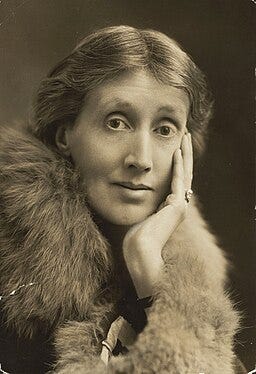

Virginia Woolf is often remembered for her finished novels—for their lyric precision, interiority, and formal innovation. But her creative life makes little sense if we imagine her operating in a single mode.
She moved—repeatedly—through multiple AuthorKind states.
Early and continually, Woolf lived as a Gatherer. Her diaries and letters are dense with observation: snippets of conversation, passing moods, intellectual questions, the texture of daily life. She was not merely recording events; she was training her attention. Much of what later appears as insight in her essays or fiction begins here, as noticing.
Long stretches of her life reflect the Incubator. Ideas for novels often lived with her for years before they found form. She wrote of waiting—sometimes impatiently—for a structure that could hold what she felt pressing from within. These were not idle pauses but periods of internal alignment.
When she entered drafting, Woolf became an intense Articulator. She wrote quickly, experimentally, allowing language to run ahead of certainty. Early drafts were exploratory rather than polished, full of risk and momentum. She trusted motion to reveal meaning.
Revision brought her into the Shaper state with seriousness. Woolf revised extensively, attentive to rhythm, structure, and coherence. What readers often experience as effortless lyricism was the result of sustained, exacting refinement.
As a publisher with the Hogarth Press, Woolf also occupied the Offerer state consciously. She thought deeply about audience, circulation, and the ethics of release—both for her own work and for others’. Publication was not an afterthought; it was part of the creative arc.
And finally, there were times when Woolf needed the Guardian. She withdrew, protected her energy, limited exposure. These moments are sometimes misread as retreat or fragility, but they were also acts of preservation—necessary boundaries in a life of deep sensitivity.
Seen this way, Woolf’s career is not a straight line but a cycle: gathering, incubating, articulating, shaping, offering, withdrawing—and beginning again.
She was not one kind of writer.
She was a writer in motion.
Love how you frame Woolf’s creative process. I also love the serendipity of reading your work as I’m in the middle of reading Art Monsters by Lauren Elkin and just read a passage about Woolf. Your interpretation fits so beautifully within the context of Elkin’s description of Woolf’s body of work. 💕
Fascinating to read such precise aspects to her writing , makes me better appreciate the varied skills I’m having to learn with my first book.