



Some months ago, early in my time on Substack, I introduced something I called the AuthorKind Archetypes. At the time, it was an experiment—an attempt to give language to the different ways writers relate to their work.
Since then, my thinking has changed.
Not because the idea was wrong, but because it was unfinished.
What I understand more clearly now is this:
most creative difficulty doesn’t come from who we are as writers, but from not recognizing where we are in the creative cycle.
We tend to ask questions like What kind of writer am I? or Why am I not producing more?
Questions like those quietly assume that creativity is a stable identity.
In practice, it isn’t.
It’s a movement.
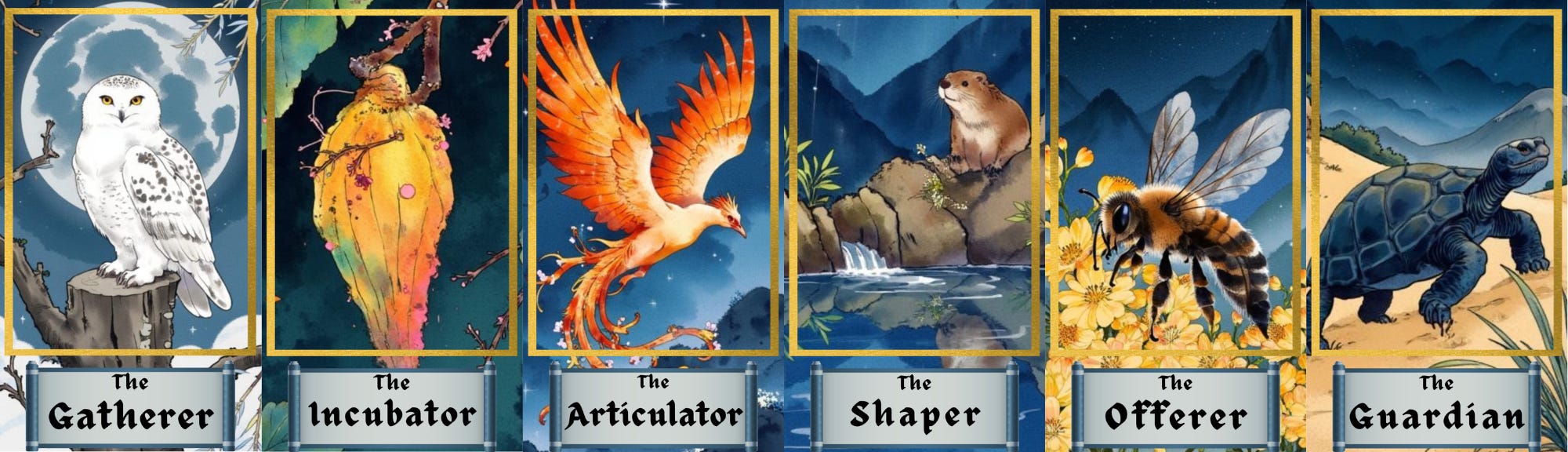
Over time—and often repeatedly—we pass through different creative states: gathering material, letting ideas form, expressing them, shaping them, offering them, and sometimes pulling back to protect what’s fragile or ourselves.
None of these states is superior.
None of them is permanent.
Problems arise not from being in one state, but from staying in one too long without noticing.
This revised AuthorKind series reflects that understanding.
Rather than sorting writers into types, it names creative postures—states we occupy for a time, often more than once, and sometimes in different combinations. You may recognize yourself immediately in one or more. You may also recognize that what fits today would not have fit you a year ago.
That’s the point.
Although this series speaks in the language of writing, these patterns appear across many forms of creativity: art, research, teaching, problem-solving, caretaking, making of all kinds. Writing is simply the lens I know best.
Over the coming days, I’ll introduce these archetypes in pairs—paired by natural tension and emotional flow.
Afterward, I will follow with an optional reflective questionnaire—not to diagnose or define, but to help you notice your current creative stance.
Finally, I’ll also share a short reflection on how one writer (or two) moved through many of these states over a lifetime, as a reminder that motion—not consistency—is what sustains creative work.
You don’t need to read everything.
You don’t need to take the test.
You don’t need to decide where you belong.
This is an invitation to notice.
If you’re here, something in you is already paying attention. That’s enough to begin.
The temporal aspect makes complete sense, as our energies move and change. Looking forward to reading the series! I can't remember if I caught the first version, but this new take is intriguing. 😁
I love this!