


Leather that creaks like a braided echo.
Hot wind flapping against rumpled chambray.
A warm and pungent scent rising from foaming sweat of the mount.
A speck on the horizon. Steady.
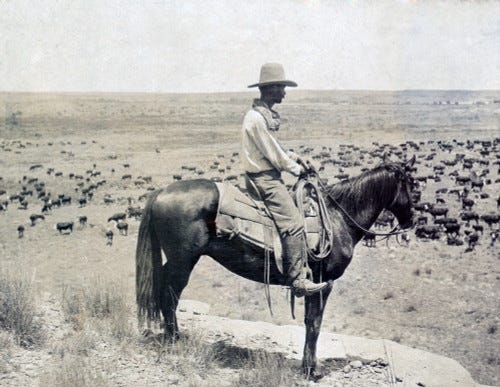
The American cowboy. The Mongolian steppe horseman.
I keep noticing the same rider.
I think of cowboys. And now of Mongolian horsemen.
Not as legend. As a recurring shape.
What kind of human being does open land require?
The land begins to explain it.
The Great Plains. The Mongolian steppe. Thousands of miles apart, yet shaped by the same demands: grass without boundary, herds without fence, distance without mercy.
When survival moves, culture learns to move with it.
Grasslands produce riders.
On the Plains, cattle moved north. On the steppe, herds shifted with season. In both places, a man’s competence could be measured in miles and in calm.
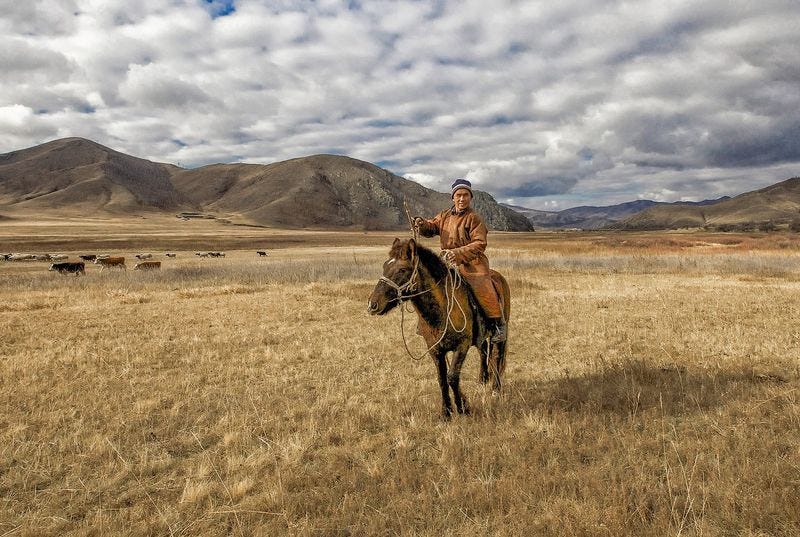
Watching The Hu—their horses, their throats shaping wind into sound—I felt an immediate recognition. It felt familiar. Not foreign. Not exotic. Familiar.
It took me a moment to understand what I was seeing.
They were cowboys.
And they rode horses.
Across such expanse, survival required movement—mounted movement. Horses were not ornamental. They were necessary.
A horse does not tolerate impatience. It does not reward noise. Calm is not gentleness; it is competence. In time, the animal shapes the rider. Quiet becomes skill. Patience becomes survival.
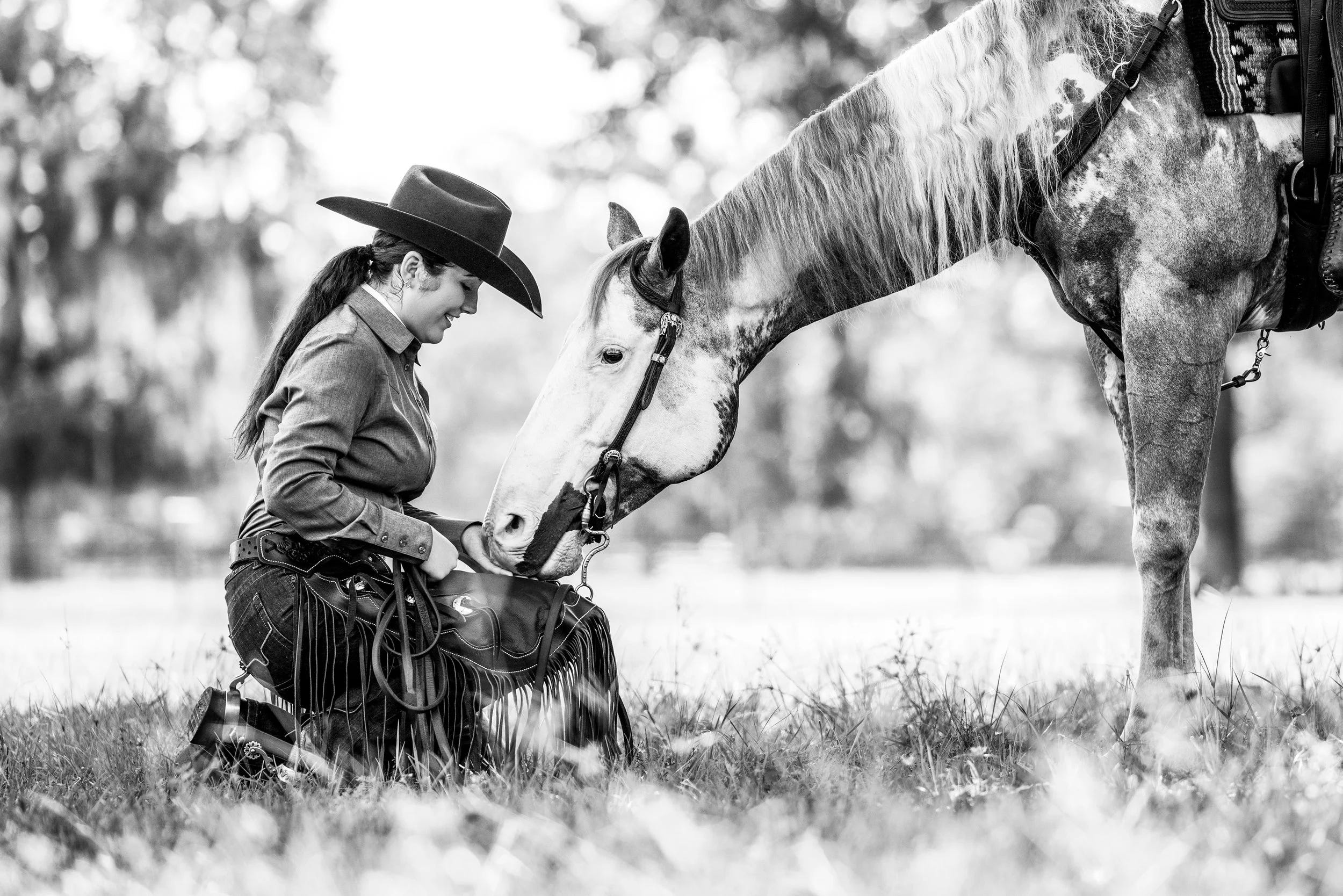
The rider relied on the horse, and the horse on the rider. A careless shift in the saddle could unseat them both. Harmony was not sentimental. It was practical.
These riders were not free in the way modern imagination prefers. They were bound—to herd, to weather, to season, to command.
The cowboy rode because cattle had to be moved. The steppe rider mounted because survival demanded range.
Mobility was not escape; it was obligation in motion. Skill was not aesthetic; it was necessary. The steadiness I recognize in both is not romance. It is discipline shaped by terrain.
I do not belong to the steppe.
I have never driven cattle across open range.
Yet when I see a rider disappear into distance, something in me steadies rather than mourns.
I do not envy the danger.
I do not romanticize the violence.
What I recognize—and admire—is something quieter: the steadiness of a body trained to meet its landscape without complaint.
A speck against the horizon.
Not vanishing.
Simply moving on.
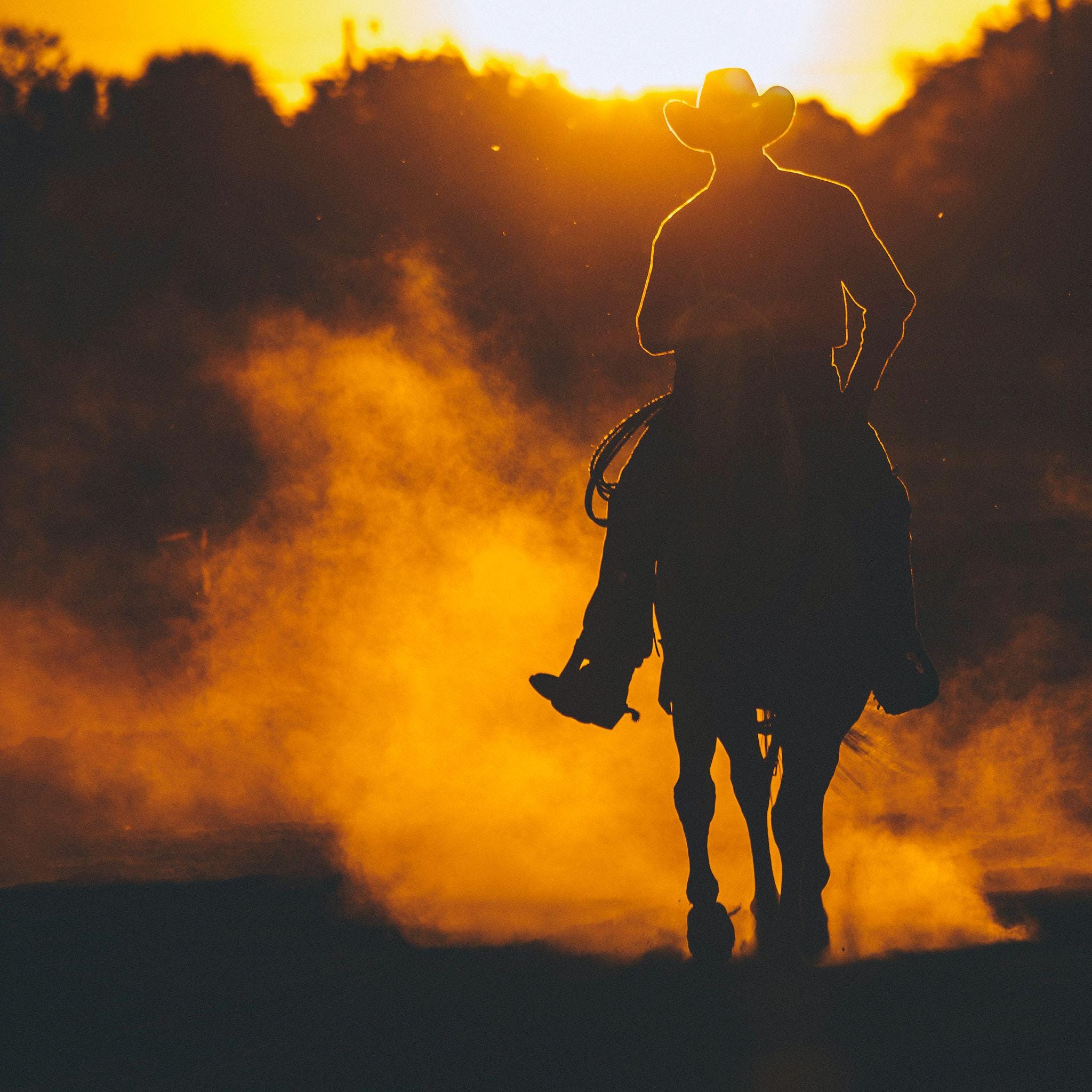

This one felt steady to write.
If it stirred something for you — admiration, resistance, recognition — I’d welcome your thoughts.
Love The Hu !
I love the awe you bring to the vastness, and it's interesting to me how that could relate to other settings -- especially in your case, space. 😉 And of course you know I hold a special interest in the relationship between people and horses. 😁