Petroglyph
Phaiku No. 20

Before telescopes and equations, there was attention.
Eyes lifted. Hands measured shadow and return. The sun, the moon, the slow drift of stars were not distant objects but companions—keepers of time, rhythm, and meaning.

Phaiku No. 20
Petroglyph
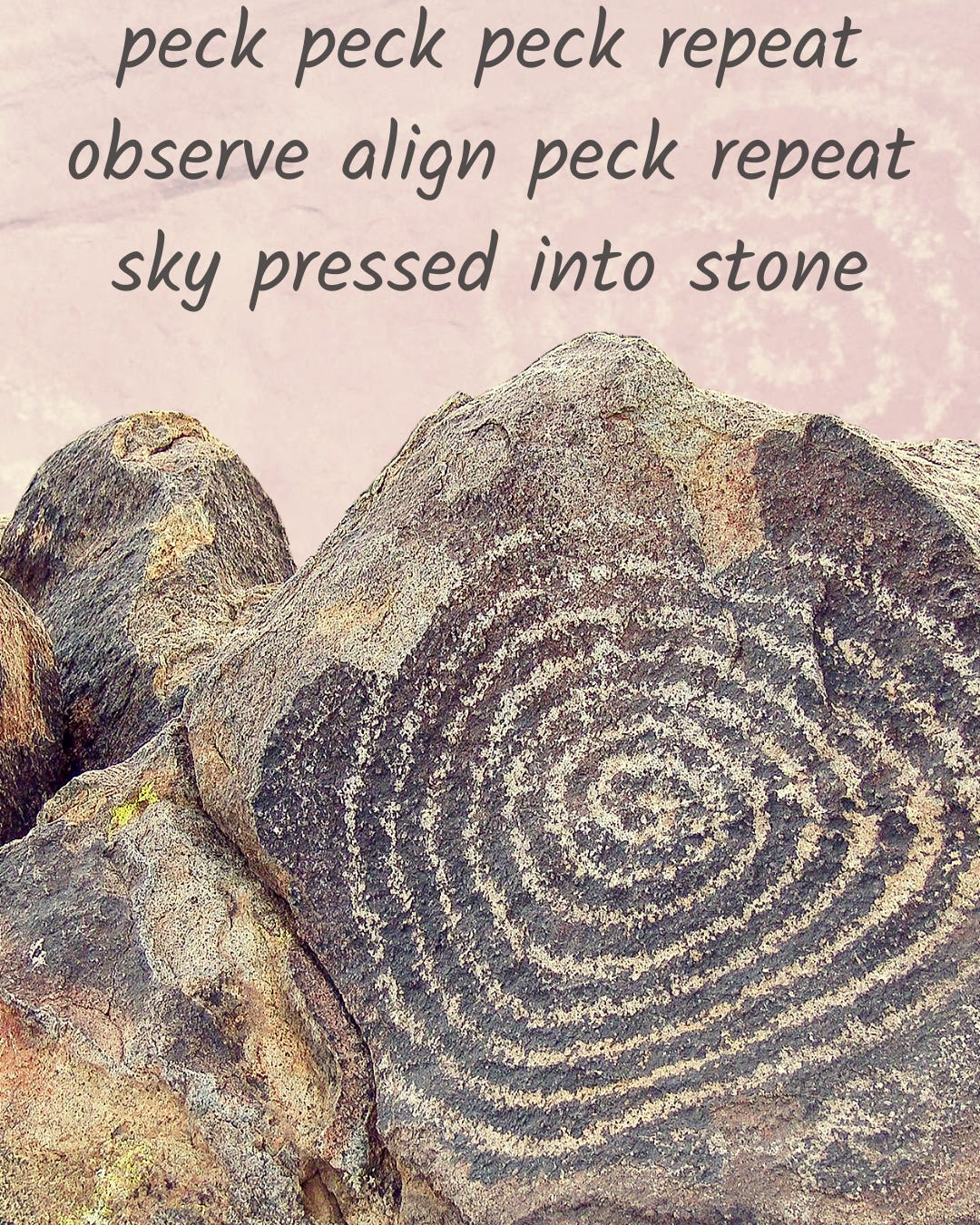
What we now call archaeoastronomy is simply the effort to listen again—to understand how early people folded the sky into story, ritual, and daily life, long before the patterns were named.
Poetry moves the same way. Through repetition, rhythm, and pattern, it holds what might otherwise be lost. It bridges the vast and the human, translating the abstract into something that can be remembered and passed on. A poem is not so different from an artifact—evidence that someone noticed, felt, and chose to leave a trace.
Ancient sky-watchers were sky-poets.
They pressed the heavens into stone.