

When Character Becomes Plot
How motivation generates conflict and narrative movement

Plot does not originate from events.
It emerges when a character’s strategy collides with the world—or with the strategies of others.

Author’s Note:
What started as a single, simple reflection has blossomed into an apparent series: Reflection on Character:
· The Enneagram and the Inner Logic of Character
· When Character Becomes Plot (current essay)
· Showing Character (to be published)

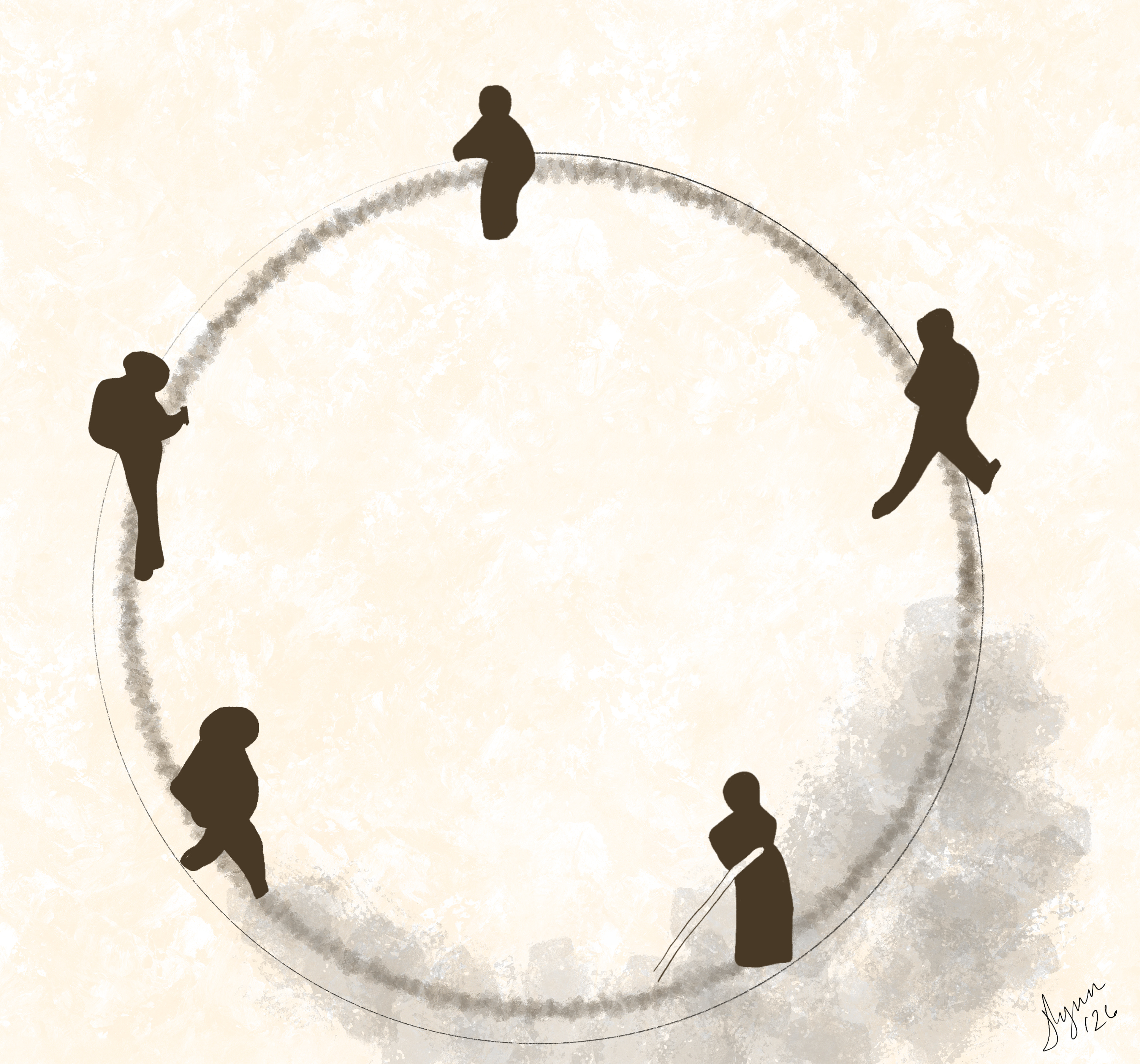
This essay examines how motivation generates conflict and narrative movement.
The Misunderstanding about Plot
Many writers begin with external events:
a murder
a war
a mystery
a disaster
But events alone do not create story.
Story begins when characters pursue goals shaped by their psychology.
The Strategy that Once Worked
In a previous essay, Where Characters Begin, we explored how psychological insight—or simply good writer instinct—reveals the pattern behind believable characters: wound, worldview, and coping strategy. At the beginning of story, we reveal the strategy that has protected the character—thus far. We show how control protects someone from chaos, or how loyalty protects someone from abandonment.
With Donnán, we saw that an unanswered question as a child—why his parents gave him to the Church—becomes the lens through which he views his entire world.
But then the world pushes back.
The World Pushes Back
The story may begin with a character’s status quo, but the plot does not begin until that status quo strategy no longer works; when circumstances change; or when another character has an opposing strategy. Or the character’s own belief proves incomplete.
Conflict begins to stir.
The plot begins to move.
When characters embody different coping mechanisms or psychological strategies to maneuver their own worldviews, we see conflict become even richer.
Donnán foresees his own death, and he uses that as a chance to prove that fate is not fixed. However, no matter how he changes the circumstances of his vision, the outcome remains the same. No matter how many times he escapes the isle of his demise, he is eventually drawn back.
Conflict becomes especially powerful when different characters pursue incompatible strategies for navigating the world.
Opposing Motivations Create Story
When truth-seeking Donnán attempts to align with Columba to find answers, he encounters a senior monk with something to prove and driven by power. When he seeks friendship, even comfort, with a seemingly sympathetic Pict warrior queen, he butts up against a fierce leader who is ultimately driven by respect and places the safety of her people above all else.
One challenges institutions.
One suppresses questions.
One defends loyalty.
Plot is the collision of worldviews.
And when characters double down on their strategies, the plot thickens.
Escalation to a Breaking Point
Story structure teaches us that our characters start in status quo, then become challenged. Status quo is disrupted, but not abandoned. Instead, characters push harder with what they know, doubling down on the strategies that once protected them.
Conflict escalates.
Columba sees Donnán’s open questioning as a threat to his power. Donnán sees the Pict queen’s loyalty to her people as dangerous to his own survival.
Escalation of conflict produces misunderstandings, moral dilemmas, and irreversible decisions.
We can’t move the story forward until what once worked no longer does.
Plot is rarely something we invent. More often, it is something that emerges when characters pursue their strategies to their inevitable breaking point.
The Strategy Breaks
Character arc insists we see a character change—‘growth’ for a positive arc. Story arc requires movement … and a final snap that propels the story toward conclusion or remedy.
Eventually, the character’s strategy must fail and bring us to the moment of crisis, which can only end one of two ways: the character must either abandon the strategy or reinterpret it.
Donnán encounters one obstacle after another as he attempts to change the circumstances of his foreseen death. Nevertheless, he refuses to relinquish his conviction that free will can bring about change, as his lifelong pursuit of truth has offered no evidence that fate is predetermined or inescapable.
The character’s arc cannot be completed unless the character gains a new understanding.
Transformation
What Donnán must eventually confront is his own worthiness of truth.
The search that once defined him must change. What began as a quest for answers becomes something deeper: a recognition that truth does not always arrive in the form he expected.
So, his transformation will come when he realizes that truth and answers are not always synonymous. This will require him to re-evaluate what he has genuinely been searching for.
Only then will we see what his full arc has become:
wound (parental abandonment) → belief (unworthy of the truth) → strategy (question authority) → failure (unable to disprove inevitability) → insight (truth does not always have an answer)
Closing Thoughts
I have not begun writing Donnán’s story, yet as I write this essay the plot begins to reveal itself almost effortlessly.
Once the motivations of the characters become clear, the events of the story follow naturally.
Plot is rarely something we invent. More often, it is something that emerges when characters pursue their strategies to their inevitable breaking point.
In that sense, stories do not merely record what happens to people. They reveal how human beings search for meaning when the ways they have learned to survive the world finally stop working.
How do your stories begin?
Do they start with an event, or with a character whose way of navigating the world eventually collides with others?
I’d be curious to hear how other writers discover the moment when character becomes plot.
I tend to start with an idea for a confrontation or other scene and build the story out from there, usually with a ton of freewriting to let the characters reveal themselves to me. Then I try to create a basic structure for the story and iterate on that as I learn more about the characters and their world.
With my current project, the big Peggy adventure story, that started as the vaguest concept of a lighthearted adventure about a couple and an act they performed that had more to do with the fate of the world than anyone knew. From there it grew to include ideas about fate, so the couple took on the roles of unshakable fatalist and devoted doubter. As the antagonist revealed himself, his powerful position brought class conflict into the story, and when Peggy showed up the conflict expanded again to include humanity versus faerie.
So I guess you could say that with each iteration, the story required that conflicts be better defined and the characters grew to do so. It's not as straightforward as defining the character elements first, and my process could probably stand a little polish! 😅