

The Enneagram and the Inner Logic of Character
How personality patterns reveal motivation, conflict, and story

From psychology to personality patterns
A character storms out of a room, challenges authority, refuses help, or pursues a dangerous idea. The behavior may feel right, but without understanding the deeper motivation behind it, the character can quickly become inconsistent—or worse, predictable.
In my previous essay, Where Characters Begin, I explored how wounds and beliefs shape character motivation. The Enneagram offers another lens for examining those patterns.
And for writers, it turns out to be remarkably useful.
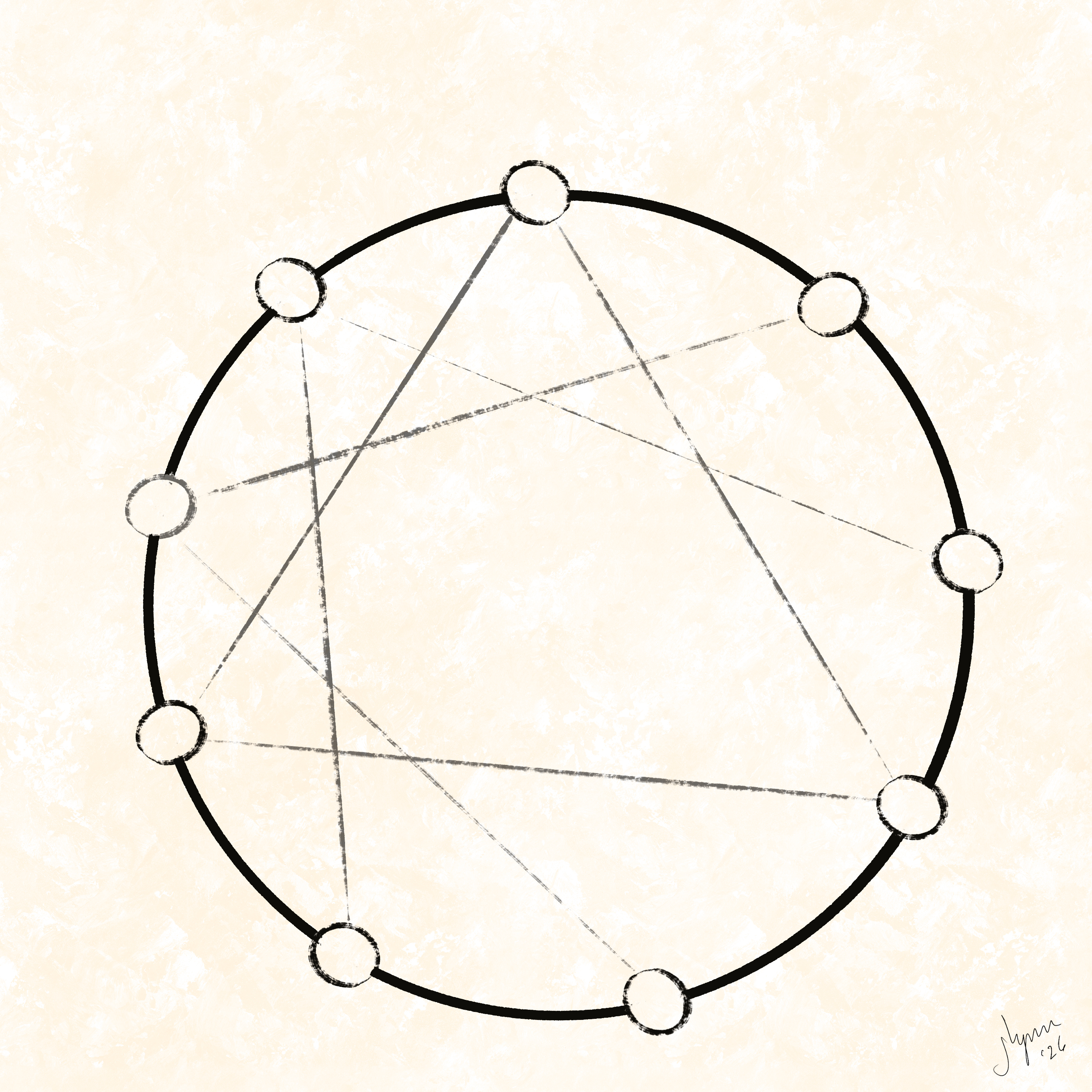
Whether you outline every scene or write by discovery, the Enneagram offers a way to deepen character motivation while also serving as a kind of internal compass. It helps clarify what a particular character would realistically tolerate, resist, or pursue.
In other words, it helps keep characters operating within their own internal logic.

What the Enneagram actually describes
Many personality systems describe what people are like.
The Enneagram focuses instead on why people behave the way they do.
In the previous essay we discussed several elements of character psychology—core fear, core desire, and coping strategy. The Enneagram organizes personality around these same dynamics.
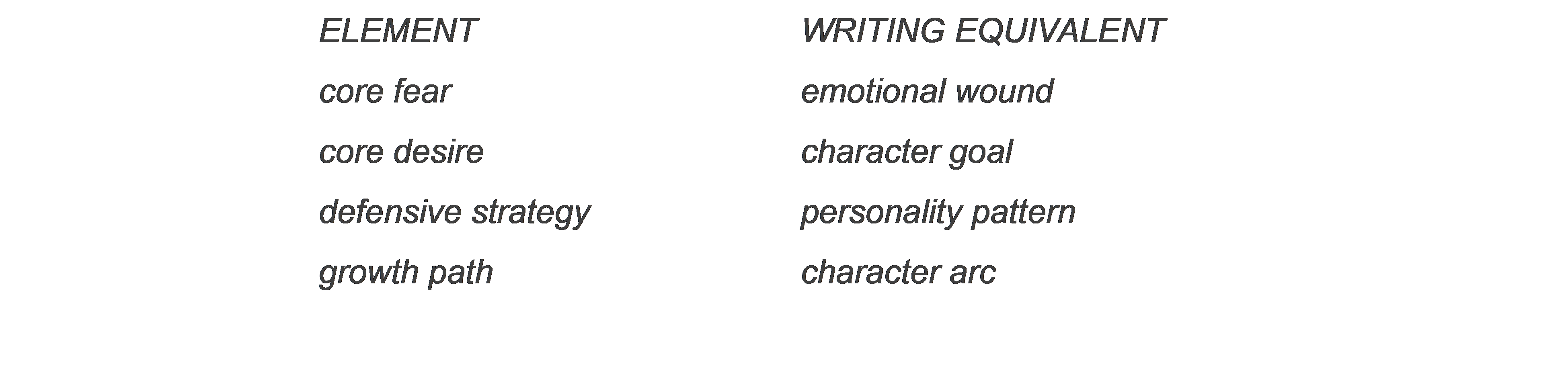
Seen this way, the Enneagram becomes less a rigid classification and more a lens through which writers can examine motivation.
And for storytelling, motivation is far more useful than a list of personality traits.
Why it works surprisingly well for fiction
The Enneagram aligns naturally with narrative structure because it is built around three things stories require: motivation, tension, and transformation.
At its heart, the Enneagram organizes personality around three questions:
What do we fear most? What do we desire most? And what strategies do we use to protect ourselves from that fear?
Each of the nine personality patterns contains an internal contradiction. These tensions are exactly the kind that generate narrative conflict.
For example:
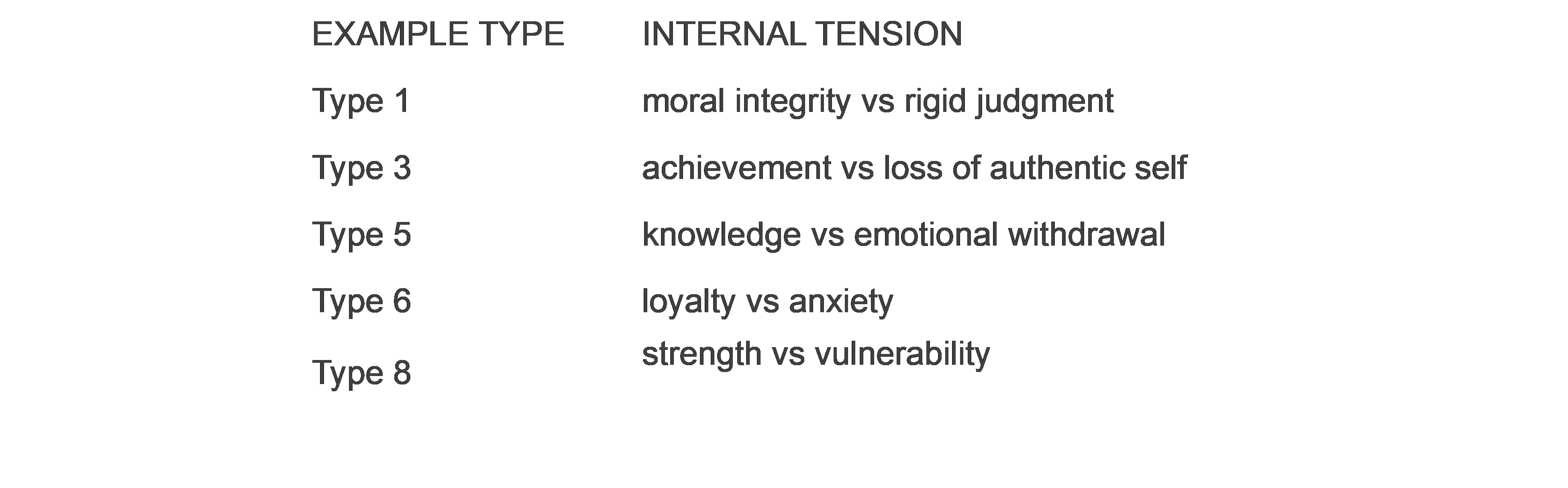
Stories emerge naturally from contradictions because characters are pulled in opposing directions.
The Enneagram also describes psychological defense mechanisms—the habitual strategies people use to protect themselves from their deepest fears. These defenses include intellectualizing, controlling, pleasing others, withdrawing, or proving competence.
All of these behaviors create predictable narrative outcomes:
conflict with other characters
misinterpretation of events
escalating mistakes
In that sense, the Enneagram provides something writers always need: engines for plot.
Finally, the system includes the possibility of change. Many personality frameworks describe people statically. The Enneagram explicitly explores how individuals behave under stress and how they grow beyond their defenses.
That dynamic mirrors the movement of a character arc.
The nine motivational patterns (brief overview)
At its core, the Enneagram describes nine motivational patterns organized around fear and strategy.
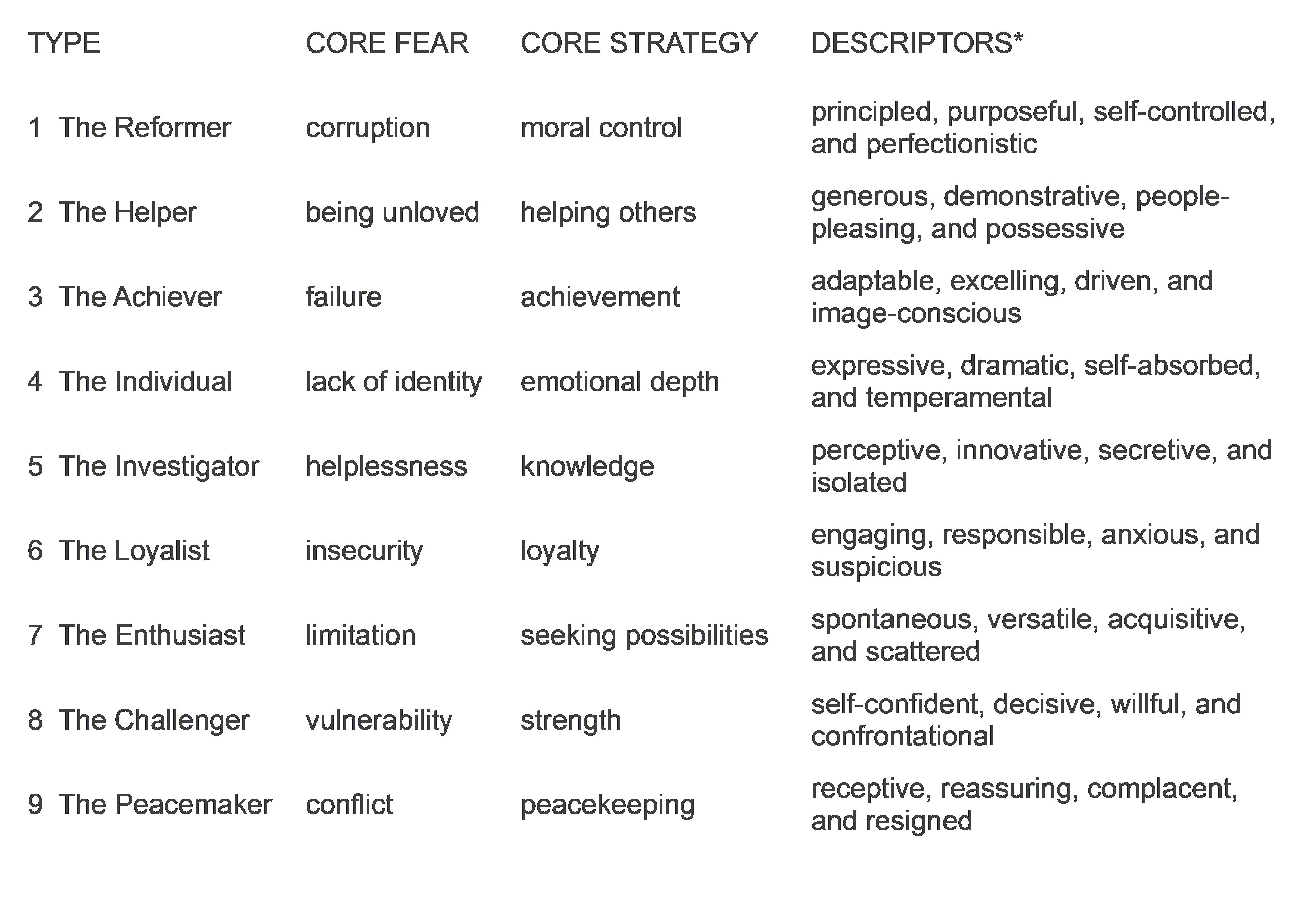
For writers, these are narrative engines, not labels.
Using the Enneagram in character design
There is no single correct way to apply the Enneagram to storytelling.
In my experience, the most effective approach is not to assign a type first, but to discover it gradually.
Many writers follow a sequence like this:
discover the character’s wound
identify the belief that grows from it
examine the coping strategy
notice which Enneagram pattern it resembles
The type usually emerges after the character begins to take shape.
Theory is useful, but stories only become interesting when the theory meets an actual character.
When I applied this framework to Donnán, the Enneagram pattern appeared almost accidentally.
wound: sent away as a child
belief: truth was withheld
strategy: question authority
goal: prove fate is not absolute
The motivational structure appeared first. The Enneagram pattern only became visible afterward.
Once I identified Donnán’s motivational pattern, something interesting happened: his opponents began to reveal themselves.
Expanding the story world
Once I recognized Donnán’s motivational pattern—closest to a Type 5 Investigator with strong Type 1 tendencies—it began suggesting other characters almost automatically.
If Donnán questions authority, then authority itself becomes a natural antagonist.
A character driven by moral order and institutional certainty—a stronger Type 1 personality—creates immediate tension. One believes truth must be discovered through inquiry; the other believes truth already exists within established structure.
The conflict becomes philosophical as well as personal.
A relational or “false antagonist” can add another layer. Imagine a Type 8 Challenger with strong Type 2 Helper tendencies: someone who values loyalty and human bonds above abstract inquiry.
Donnán questions bonds.
She embodies them.
He seeks truth beyond structure.
She defends meaning within it.
Suddenly the story contains not only conflict, but multiple psychological perspectives.
Testing the character logic
Of course, fictional characters cannot literally take personality tests.
But I found it useful to design situational questions that reveal how a character instinctively responds to authority, uncertainty, belonging, and truth.
For example:
When the monks refuse to explain why he was sent away, what troubles Donnán most?
Is it that the answer might reveal something shameful about him?
That authority expects obedience without explanation?
Or that they refuse to explain how things actually work?
Each response reflects a different motivational pattern.
To explore this further, I created a short set of situational questions and asked an AI system to generate responses corresponding to the nine Enneagram types. By examining which responses aligned most consistently with Donnán’s behavior in the story, I could see whether my interpretation of his personality held together.
Was the result a scientifically valid Enneagram assessment?
Certainly not.
But as a test of narrative coherence, it proved surprisingly useful.
The exercise confirmed that Donnán’s decisions consistently reflected the same motivational pattern.
And that consistency is what makes characters feel real.
The limits of personality frameworks
Of course, no psychological system can fully capture the complexity of a human being—or a fictional character.
These tools should never replace imagination.
What they can do is help writers recognize patterns in human behavior. They give us language for understanding why characters make certain choices and resist others.
Ultimately, stories succeed when characters follow their own internal logic.
Why these tools matter
Readers believe in characters when their behavior reflects recognizable human patterns.
Psychology does not create those patterns. But it can help writers see them more clearly.
Characters begin with a question.
The Enneagram simply helps reveal the strategies people develop while trying to answer it.
Have you ever used the Enneagram to understand a character?
Do you begin with personality, psychology, or plot when building your stories?
What strikes me about applying any personality system to characters is that the deepest fictional logic isn't just motivation but constitution, the raw material a character is working with before any wound or strategy forms. Two characters with identical wounds and identical coping strategies can still behave completely differently because their underlying nature processes the same experience differently.
BaZi Astrology (Omnigram) maps that constitutional layer from birth data, no self-report, no wound narrative required. For a character like Donnán, it would produce something interesting: not why he questions authority, but what elemental structure makes that particular response feel inevitable for someone built the way he's built. The motivation becomes less chosen and more fated, which is probably closer to how the best fictional characters actually feel.
Your prior essay on character and this one make a great resource for struggling new writers to have in their tool box.