


Author’s note:
Have you ever experienced ‘writer’s high?’ I don’t know what else to call it, but when I embarked on writing this second essay in the Star Archive series, I experienced a euphoria unlike anything I can recall.
What got me giddy? Simply the imagining of what it must have been like … to be left with nothing but feelings. No names. No language. My gods, what a pure astonishment that must have been.
Fire, fear, omen, awe.
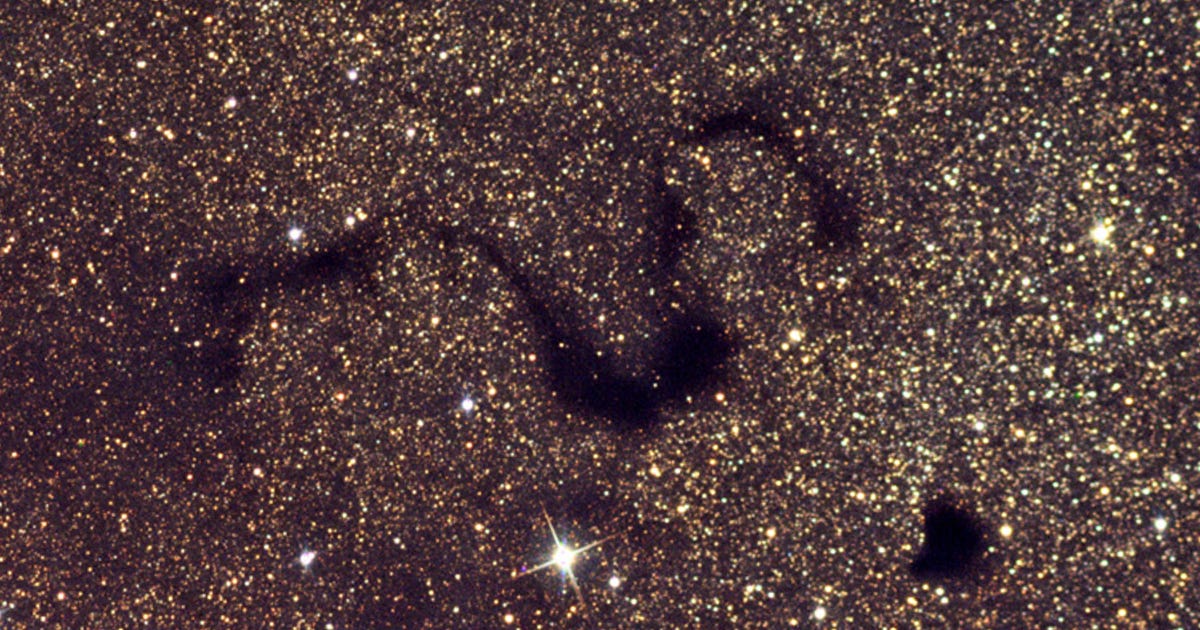
Imagine a dark night in a young world, when our earliest ancestors lifted their faces to the sky. A flash tore open the darkness—lightning, the kind you and I have seen countless times—but there were no words for it. No word for lightning. No word for streak of fire. No word even for light. Can you imagine witnessing a wonder you cannot name?
They had nothing but the shock of it. Nothing but awe.
No wonder poetry was born. Not to explain the world, but to hold what burst through it—what could be felt long before it could be understood. How glorious it must have been to experience the world uncarved by language, to meet existence first as sensation and only later as meaning.
Raw with awe.
That same ancient astonishment didn’t end with prehistory. It echoes in the earliest writings we have, surfacing whenever human beings encountered something in the sky that defied the available vocabulary. Even in literate cultures, when the heavens behaved strangely, people reached for the oldest shape-language they possessed—the cosmic serpent, the sky-dragon, the writhing streak of fire.
And perhaps the most vivid example appears in 793 CE, preserved in one of the most important records of early England.
Dragons Over Lindisfarne
The Anglo-Saxon Chronicle entry for the year 793 is blunt and unnerving. It describes ominous signs appearing over Northumbria just before the Viking attack on Lindisfarne—fierce lightning, whirlwinds, “fiery flashes,” and most strikingly:
“Dracan wæron gesewene on þam lyfte.”
“Dragons were seen in the sky.”
To the chronicler, “dragon” did not mean a four-limbed medieval beast. The word draca carried a much older resonance—a serpentine, sky-dwelling, luminous force. It was the closest term they had for something long and writhing and aflame across the heavens: a comet-tail, an auroral serpent, a meteor-trail twisting in the wind—a shape of fear and wonder.
What they saw could have been atmospheric plasma. Or a rare aurora. Or a meteor train glowing red in the northern sky. We can only speculate.
But this part is certain:
When an Anglo-Saxon scribe reached for “dragon,” he was naming the shock of the sky—not a creature, but a phenomenon powerful enough to feel alive.
Does not a poet do the same—reach for words powerful enough to give life to something seen or felt?
The scribes who recorded the Anglo-Saxon Chronicle were monks, not poets … until they were.
When the monks at Lindisfarne looked to the heavens, they saw lightning, fiery flashes, and immense whirlwinds—an apocalyptic omen and, in hindsight, a warning of what would become the start of the Viking Age.
When Myth Became a Message
For the Anglo-Saxons, dragons were not monsters perched on gold or hoarded in caves. They were signals. They belonged to a vocabulary of meaning older than written English—beings of fire, wind, and sky whose appearance marked the boundary between safety and catastrophe. A dragon was a message. A serpent of light meant the world was about to change. And in 793, it did: not by cosmic forces this time, but by human ones arriving from the sea.
“Dragons in the sky” came from naming a shape. The closest Anglo-Saxon textual cognates were:
draca (fiery serpent, supernatural omen)
wyrm (snake, serpent, cosmic force)
lyfte-floga (“air flyer,” used for meteors and demons alike)
These are all serpent-shaped forces, not beasts. And the monks at Lindisfarne in 793 interpreted them through Germanic serpent myths and Christian apocalyptic symbolism.
The sky was consulted often for signs of what was to come—an old habit still practiced today. Omens.
The Völuspá tells how one of Odin’s seers foretold the coming of Ragnarök—the violent end of the world: the earth sinking into the sea, when “the sun turns black, stars fall.”
Doesn’t this sound like how an ancient sky-watcher—lacking the words, the data, the scientific understanding—might describe a solar eclipse?
Norse mythology imagined two wolves chasing the sun and the moon—a mythic rendering of the cycle of day and night. It made sense to think that eventually the wolves would catch up and devour them, causing the cosmic apocalypse. A total solar eclipse might indeed appear like the sinking of the world into the endless sea of the cosmos.
The Greeks and Romans sought portents from the heavens as well. One only needs to recall the comet that streaked across the sky after Caesar’s murder. A hairy star or fiery beard. A sword or a flaming arrow. A ghostly apparition.
No matter how the seers named it, C/-43 K1 or Caesar’s Comet was seen as the deification of Caesar or, perhaps, as reassurance from the heavens that the tyrannicide was righteous.
Cosmic omens. Political portents.
Images of Fear
But why did these early watchers of the sky resort to images of fear?
Wonder, yes—but a lack of scientific understanding certainly stirred the pot. These watchers had no way to interpret what they observed, so whatever appeared in the sky filtered instantly through pre-existing cultural anxieties and concerns.
Fear would have been a natural response to any disruption of the natural order. Unusual cosmic events almost certainly evoked fear of having angered powerful and temperamental gods.
Emotional memory sticks; fear becomes mnemonic. Fear itself makes an event easier to remember—often in vivid and enduring detail. So send forward the fiery beasts of the sky. We will remember.
The sky speaks, and once upon a time, observers without words or data interpreted as best they could through imagery. These sky-watchers and wonderers of old gave us mythic beasts—once ineffable—that literally fell from the sky for poets and all to imagine.
They wondered about what we may take for granted today.
Maybe today we have too many words … too little wonder.
We call it aurora. They called it dragons.
Different names. Same sky. Same awe.
How would you describe something from the cosmos that caught your naked eye?
I would love to hear how you might sort out a description of something you had no words to describe.
This essay is part of the Star Archive Series.
Intro: The Star Archive: How Poetry Saved the Sky
Essay 1: The First Astronomers Were Poets
Next time …
We endeavor to examine the ideal that poetry is not text, but rather patterned meaning—something of song and pictographs.

Oh wow, I'm totally with you--what must it have been like to see these things without even the most basic scientific explanation? It almost makes me jealous! I don't think it's that we have too many words now, but maybe we've grown so complacent in those words that we've forgotten how to really use them.
Good one, thanks. The heavens declare indeed...wonder what happened to that Atlas C/2023 A3-lyfte-flogga...👽🤔